2 Nov 2026
Charting Milestone Sequences and Contributor Influences in Framework Advancement
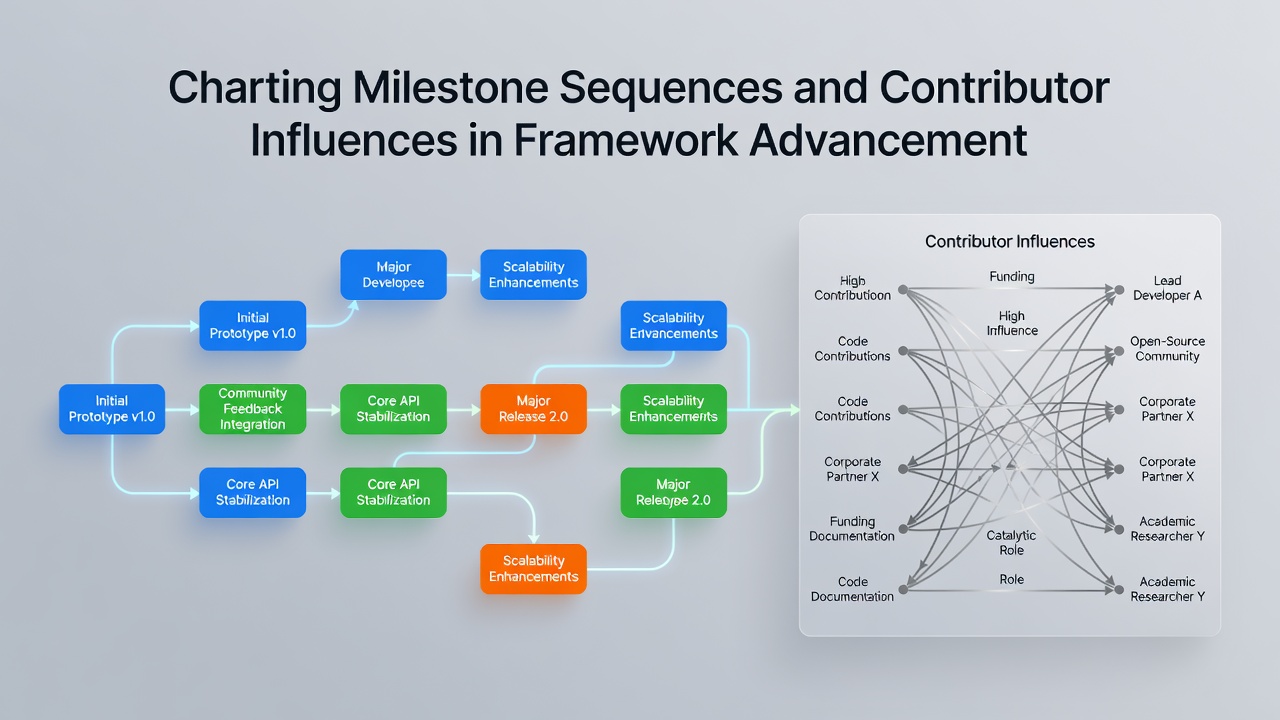
Framework advancement relies on systematic charting of milestone sequences that mark key stages from initial design through iterative releases and long-term stabilization, while contributor influences shape the direction and pace of those sequences through code submissions, architectural decisions, and community coordination. Researchers track these patterns by mapping temporal data points where specific features reach completion, bugs receive resolution, and compatibility layers integrate with external systems, which reveals how individual and group inputs accumulate into coherent progressions over time.
Mapping Milestone Sequences in Practice
Sequences emerge when developers establish baseline versions, followed by incremental updates that address performance bottlenecks or expand interoperability, and observers note that these progressions often cluster around quarterly cycles with concentrated activity near major version thresholds. Data from open repositories shows that early milestones tend to focus on core module stabilization, whereas later ones shift toward optimization and documentation refinement, creating a predictable rhythm that external analysts use to forecast upcoming integration points. In one documented progression, a modular framework reached its first stable release after 14 months of sequenced commits that aligned contributor efforts around shared testing protocols, and subsequent milestones incorporated feedback loops from downstream users that accelerated adoption rates across multiple platforms.
Tracing Contributor Influences Across Stages
Contributor influences operate through distinct mechanisms such as proposal submissions that introduce new primitives, review processes that refine implementation details, and maintenance roles that sustain backward compatibility, all of which collectively determine whether a milestone advances on schedule or requires recalibration. Studies from the University of Toronto indicate that frameworks with distributed contributor bases exhibit longer sequences between major releases because coordination overhead increases, yet the resulting architectures demonstrate greater resilience to external disruptions. Those who analyze commit histories find that influential contributors often concentrate their input during transition phases between milestones, where their decisions on dependency management or API surface adjustments propagate effects through the entire sequence and alter timelines for dependent projects.
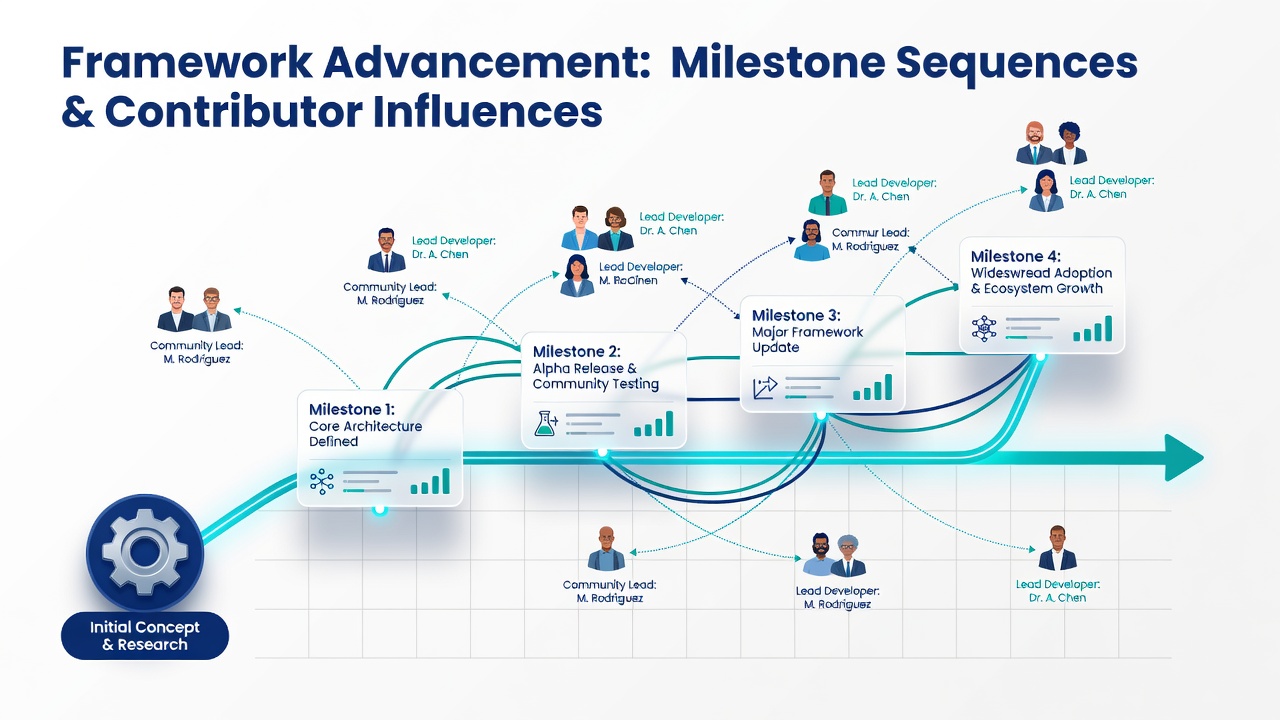
What's interesting here is how influence patterns shift as frameworks mature, moving from individual innovators who establish foundational elements to collaborative clusters that handle scaling challenges, and evidence from repository analytics supports this transition in several established projects tracked over multi-year periods. European Research Council reports highlight similar dynamics in collaborative software initiatives where geographic diversity among contributors correlates with broader milestone coverage across functional domains, although this comes with added complexity in aligning release cadences.
Analytical Approaches and Data Integration
Analysts apply sequence mining algorithms to version control logs and issue trackers, which allows identification of recurring patterns such as dependency resolution clusters or documentation updates that reliably follow feature implementations, and these methods produce visual timelines that overlay contributor activity metrics for comparative review. Integration of external data sources, including conference proceedings and technical reports, supplements internal project records to capture influences that occur outside formal commit channels, such as discussions at developer summits scheduled for November 2026 that may preview upcoming milestone priorities. Observers note that combining quantitative commit frequency data with qualitative assessments of pull request discussions yields more accurate models of how contributor networks drive sequence acceleration or delays, particularly when frameworks encounter compatibility pressures from evolving hardware or regulatory standards in different jurisdictions.
Implications for Ongoing Framework Development
Effective charting supports strategic planning by highlighting bottlenecks where contributor influence remains underutilized, which enables project maintainers to adjust governance structures or outreach efforts that encourage broader participation during critical sequence phases. Data shows that frameworks maintaining transparent milestone documentation attract sustained contributor engagement, resulting in tighter alignment between proposed changes and actual delivery timelines across successive releases. Those who've examined longitudinal datasets emphasize that early identification of influential nodes within contributor graphs can inform resource allocation decisions that prevent sequence fragmentation, thereby preserving forward momentum through complex evolutionary stages.
Conclusion
Charting milestone sequences alongside contributor influences provides a structured lens for understanding framework advancement, drawing on repository analytics, cross-regional studies, and coordinated events such as those anticipated in November 2026 to build comprehensive models that guide future development trajectories. This approach integrates factual records of progress with observable patterns of human input, delivering actionable insights for practitioners who manage evolving technical systems.